
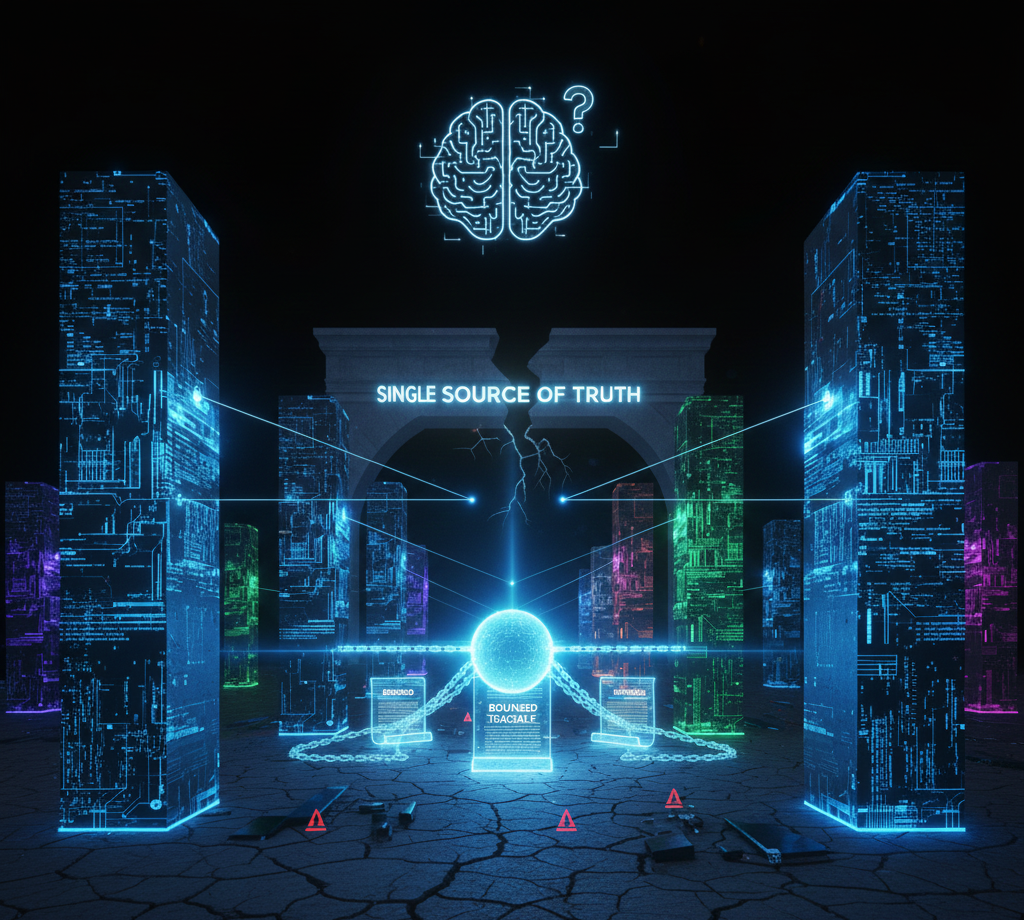
The Myth of the Single Source of Truth
System fragmentation is often treated as a temporary problem. We tell ourselves that once the migration finishes, once systems converge, a single source of truth will finally emerge.
In practice, that assumption rarely holds.
Modern enterprises operate in fragmented landscapes by design. Phased migrations take years. Vendors change incrementally. Regulatory constraints prevent consolidation. In many cases, multiple systems coexist intentionally.
Fragmentation is no longer the exception. It is the operating reality.
The Trust Gap
As long as systems agree, fragmentation is manageable. The problem begins when they do not.
When records diverge and reports contradict each other, organizations stop trusting “the system” and start looking elsewhere. In those moments, authoritative documents, like statements, notices, payslips, become the final reference point.
Not because they are efficient, but because they are legally and operationally defensible.
Why Generic Document AI Fails Here
This is where generic Document AI struggles. Most models assume stable systems and consistent training data. Fragmentation breaks both.
In a fragmented world, “high accuracy” metrics look acceptable until correctness matters. In regulated environments, post-hoc confidence is not enough. Truth must be:
- Bounded: Limited to what the document explicitly states
- Traceable: Every output linked to specific source content
- Defensible: Verifiable through audit trails
This is the context Khaonix was designed for. Not to replace enterprise systems, but to operate where systems disagree, at the document level, where trust must be established independently.
In fragmented landscapes, competitive advantage does not come from assuming fragmentation will disappear. It comes from building AI that operates in the world as it actually exists.
7 January 2026