
ARTICLES
I see many LinkedIn posts and articles about corporate AI adoption and agentic AI. But very few talk about one of the less discussed risks: AI cost unpredictability.
Traditional service centers usually have relatively stable economics. Companies know how to plan headcount, personnel cost, outsourcing contracts and scaling.
AI changes this model quite a lot.
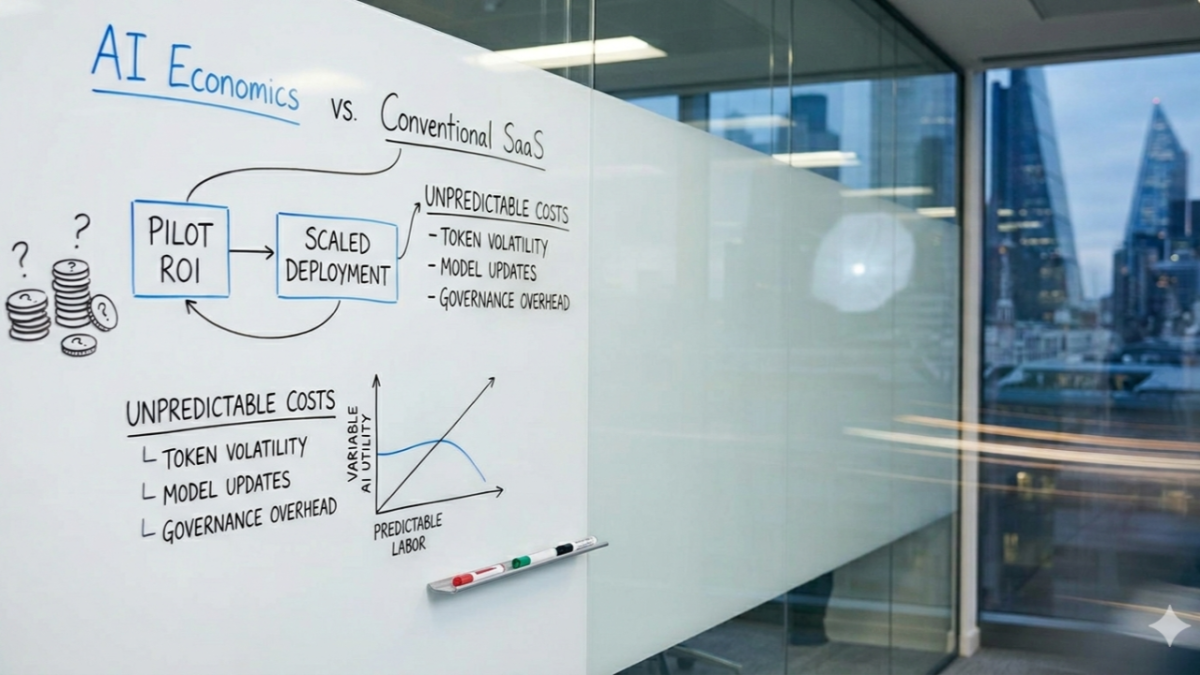
In pilot phases, ROI often looks very impressive. But there is a big difference between a 50-user pilot and a 5,000-user enterprise deployment.
Suddenly you have many additional variables:
- model pricing changes
- token consumption growth
- revalidation after model updates
- governance overhead
- human review layers
- vendor dependency
- infrastructure duplication because of compliance or regional requirements
In many companies, AI is still budgeted more or less like traditional SaaS software. But I think the comparison is not fully correct.
SaaS behaves mostly like a fixed-cost model. AI behaves more like a variable utility with external dependencies.
The market is also still immature. Long-term cost behavior is largely unknown and vendors, models and pricing structures are changing very quickly.
Another point is that many AI vendors are still strongly focused on growth and adoption. Profitability is often secondary at the moment. For example, OpenAI and Anthropic are still not profitable.
This creates an important strategic question for enterprise buyers: what happens to AI economics once the market focus changes from growth to profitability?
This does not mean AI will not reduce costs. In many areas it already does, and model costs may also decrease significantly over time.
But the main issue is that long-term AI economics are still difficult to predict.
Replacing predictable labor cost with externally dependent and constantly evolving AI operating cost is not automatically efficiency.
The companies that will manage this best may not be the ones deploying the most AI, but the ones building the most controllable AI economics.